
The Line at the Bottom of the World
There is no sign waiting at 66°33′ south.
No border station rises from the ice. No painted line stretches across the water. You know you have entered the Antarctic Circle because the coordinates say so, and because the world around you has been reduced to ice, ocean, rock, and an almost disorienting amount of sky.
Viking's new 15-day Into the Antarctic Circle itinerary is built around crossing this exact line. As one of Earth's five major circles of latitude, the Antarctic Circle has long been regarded as a milestone in polar exploration, and one reached by remarkably few travelers.
After beginning in Buenos Aires, flying to Ushuaia, and crossing the Drake Passage, you spend days six and seven sailing beyond 66°33′ south into a more remote stretch of the White Continent.
There, the achievement is not symbolic. You can point to the coordinates and know precisely when you crossed into the Antarctic Circle itself.
The crossing may happen thousands of miles from home, but securing your place begins much earlier, when the departure dates first appear.
Why Viking Travelers Look a Year Ahead
Viking Cruises has opened its 2027–2028 ocean and expedition voyages, and for guests who have sailed with the line before, “plan ahead” is not really advice. It is the operating system.
The ships are small on purpose. Viking’s all-veranda ocean ships carry roughly 900 guests, allowing them to reach ports larger vessels cannot always access. It also means fewer staterooms and fewer opportunities to secure the exact itinerary, date, and category you want.
Payment deadlines can arrive many months before departure, depending on the offer in place when you reserve. Choosing early allows you to secure a preferred sailing while there is still a meaningful selection, then plan the financial calendar alongside the journey.
Expedition seasons create another limit. Antarctica and the polar regions have only so many weeks when ships can safely enter their waters. Once those departures fill, the next opportunity may be an entire year away.
Taken together, those realities make booking 12 or more months ahead feel less like excessive enthusiasm and more like the practical first step toward crossing that distant line.
What Else 2027 Puts on the Map
The Antarctic Circle may be the headline of Viking’s newly opened season, but it is not the only reason to look ahead.
Viking has also released additional 2027–2028 dates for ocean and expedition voyages across all seven continents.
Some return to the ports that built the company’s destination-first reputation. Others prove that an expedition does not have to begin at the bottom of the world.
Northern Europe at a Slower Pace
On the 15-day Viking Homelands voyage, you leave Stockholm the way people have for centuries: by water.
The Swedish capital slowly breaks apart into islands behind you. Ochre-colored buildings and church spires give way to the wider Baltic, where trade and migration have connected the surrounding countries for generations.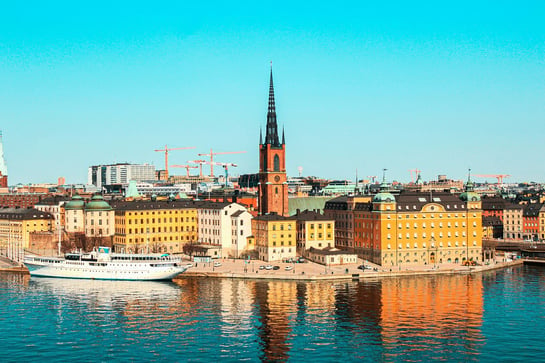
In Tallinn, cobbled lanes lead you beneath medieval stone towers, through hidden courtyards, and into a city shaped by centuries of Danish, Swedish, German, and Russian rule. Gdańsk brings color back to the waterfront through its narrow merchant houses, lively cafés, and busy market squares.
From Gdańsk, the voyage turns west toward Norway, and the character of the journey shifts with it. City streets and waterfront squares give way to narrow fjords, rising mountains, and waterfalls descending from high plateaus. By the time you reach Bergen, the Baltic’s trading cities have given way to the geography that made the Vikings seafarers in the first place.
Overnight stays in Stockholm, Oslo, and Bergen keep the journey from becoming a race between ports. You have time to see the cities after the daytime crowds recede, when restaurant windows begin to glow, and the streets feel as though they belong to the people who live there again.
Asia After the Sun Goes Down
The 15-day Far Eastern Horizons itinerary begins in Hong Kong, where ferries cross the harbor beneath a skyline that seems determined to climb higher.
By day, you move between temples, markets, and glass towers. At night, signs flicker to life above narrow streets while restaurant tables spill toward the sidewalk. Because the itinerary includes overnight stays in four ports, you are not required to leave just as the city begins revealing another version of itself.
The voyage continues through Taiwan and Japan, linking places shaped by imperial power, colonial influence, wartime memory, and extraordinary reinvention.
In Nagasaki and Hiroshima, history is not treated as something safely finished. You hear how the past continues to shape the cities people inhabit now. By the time you reach Tokyo, you have moved through centuries of cultural exchange and political change, arriving in one of the world’s most modern capitals with a clearer sense of what came before it.
This is where Viking’s style of travel makes its argument most effectively. The destination is not flattened into a list of landmarks. You are given enough context to notice the connections between them.
An Expedition Closer to Home
On the 15-day Great Lakes Collection, you travel from Toronto to Duluth across all five Great Lakes.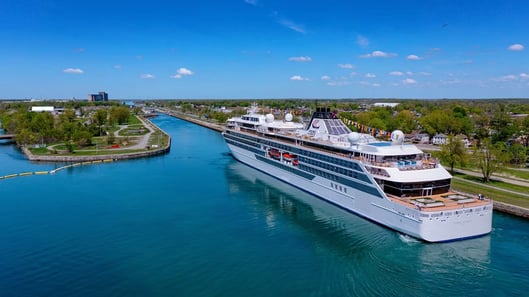
The scale may surprise you. From the deck, the horizon looks more like open ocean than inland water. Yet the route carries you through a system that has shaped Indigenous life, European settlement, industrial expansion, and the movement of goods across North America.
You feel the power of Niagara Falls before tracing the sheltered inlets and pink granite islands of Georgian Bay. Farther west, your ship passes through the Soo Locks, where vessels are raised and lowered between Lake Huron and Lake Superior, as they have been for more than a century.
Then the cities fall away. Boreal forests line the shore, interrupted by rock outcrops and long stretches of open water.
The voyage borrows the tools of polar expedition travel without requiring you to travel to the bottom of the world. Viking’s expedition team brings science into the experience through fieldwork, onboard research, and opportunities to examine the freshwater ecosystems surrounding you.
The result is a journey that makes North America feel newly enormous.
A Day Built Around Where You Are
Morning arrives quietly on a Viking ocean ship.
You pull back the curtain and step onto your veranda. Every ocean stateroom has one, so the destination is already waiting before breakfast. 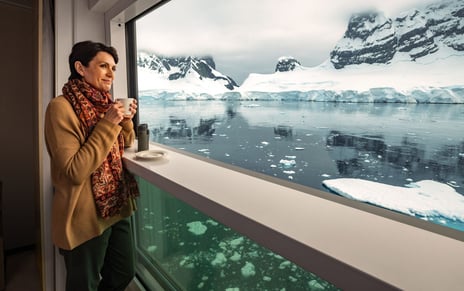
Perhaps Bergen’s hills are still hidden in mist. Perhaps the first light has reached the rooftops of a Mediterranean port.
Once ashore, an included excursion gives you a foundation for the day. It might introduce the architecture of an old quarter, the political history behind a capital, or the traditions that continue to shape daily life. The excursion is not meant to tell you everything, but it gives you somewhere intelligent to begin.
Back on board, the Viking Resident Historian adds another layer.
The program includes presentations and discussions on the history, art, architecture, and culture of the places ahead. Before Venice, you might hear the story of the Venetian Republic. Before Athens, Greek civilization moves from a chapter you once studied, to the context for tomorrow morning.
That context changes what you notice.
A cathedral is no longer simply beautiful. You understand who paid for it, what power it represented, and why it survived. A harbor is no longer merely picturesque. You begin to see the trade routes, military ambitions, and migrations that once passed through it.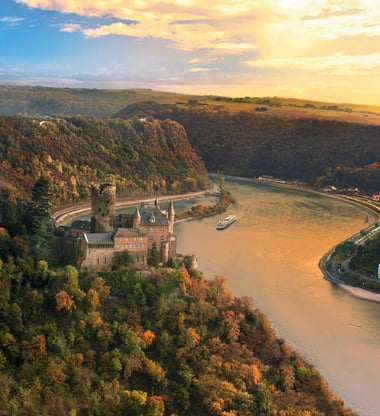
By evening, there is no casino flashing for your attention and no waterslide rising above the deck. Viking welcomes guests 18 and older and deliberately leaves out the casino, creating a ship where the destination remains the central event.
Those choices are not limitations quietly buried in the fine print. They are the point.
Viking is for the traveler who would rather continue a conversation over dinner than compete with another round of announcements. The one who brings a book about the place they are visiting and may actually finish it. The one who wants the ship to provide comfort, context, and a clear view of the world outside it.
For the Traveler Who Keeps Looking
You do not need to be a historian to sail with Viking. You only need to be curious enough to ask the next question.
Viking calls its voyages experiences for “the thinking person,” but the idea is less formal than it sounds. It means the journey does not end once you have seen something beautiful, because beauty is where the investigation begins.
That may be the real reason Viking guests book early. These are not journeys chosen casually from a calendar. They are journeys you begin imagining yourself inside long before you go.
You picture morning mist lifting from a Norwegian fjord. You wonder what Hong Kong will feel like after dark. You think about standing on a quiet deck as the coordinates move past 66°33′ south.
Then, eventually, you choose the date that makes it real.
Some lines, after all, are only crossed once.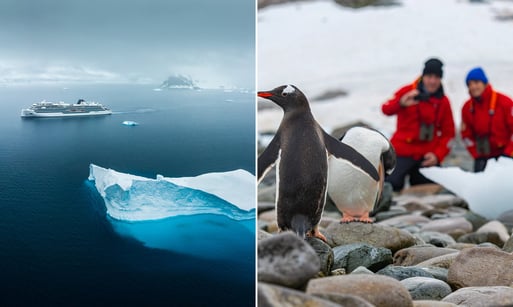
Viking’s 2027–2028 ocean and expedition voyages are now available, including the first departures of Into the Antarctic Circle. Reach out to compare itineraries, review current deposit and payment terms, and find the departure and stateroom that fit the journey you have in mind.