
You Enter Tomorrow Before the View Changes
Somewhere between Pago Pago and Apia, Regent Seven Seas Cruises carries you into tomorrow, and the Pacific takes an entire day from you.
Aboard Seven Seas Splendor, the clocks move forward 24 hours as you cross the International Date Line. There is no seam in the ocean, no marker on the horizon, and no visible sign that the world has turned to a new page.
The water looks exactly the same. The calendar does not.
The Missing Day is Only Part of the Story
Departing February 23, 2027, Pearls of the Pacific is a 21-night, independently bookable chapter of Regent’s 140-night World of Splendor, the line’s first World Cruise aboard an Explorer-Class ship.
The same suite, up to 64 included shore excursions, and six sea days hold the journey together from Tahiti to Australia.
It is not simply a collection of tropical ports. It is a journey measured in changing coastlines, mornings without land, and one date surrendered somewhere in the open Pacific.
Here's how it unfolds.
Moorea
You go to bed in Tahiti and leave it before breakfast.
Seven Seas Splendor slips out of Papeete at 5 a.m., when the harbor is dark and the island has been reduced to a few lights along the shore.
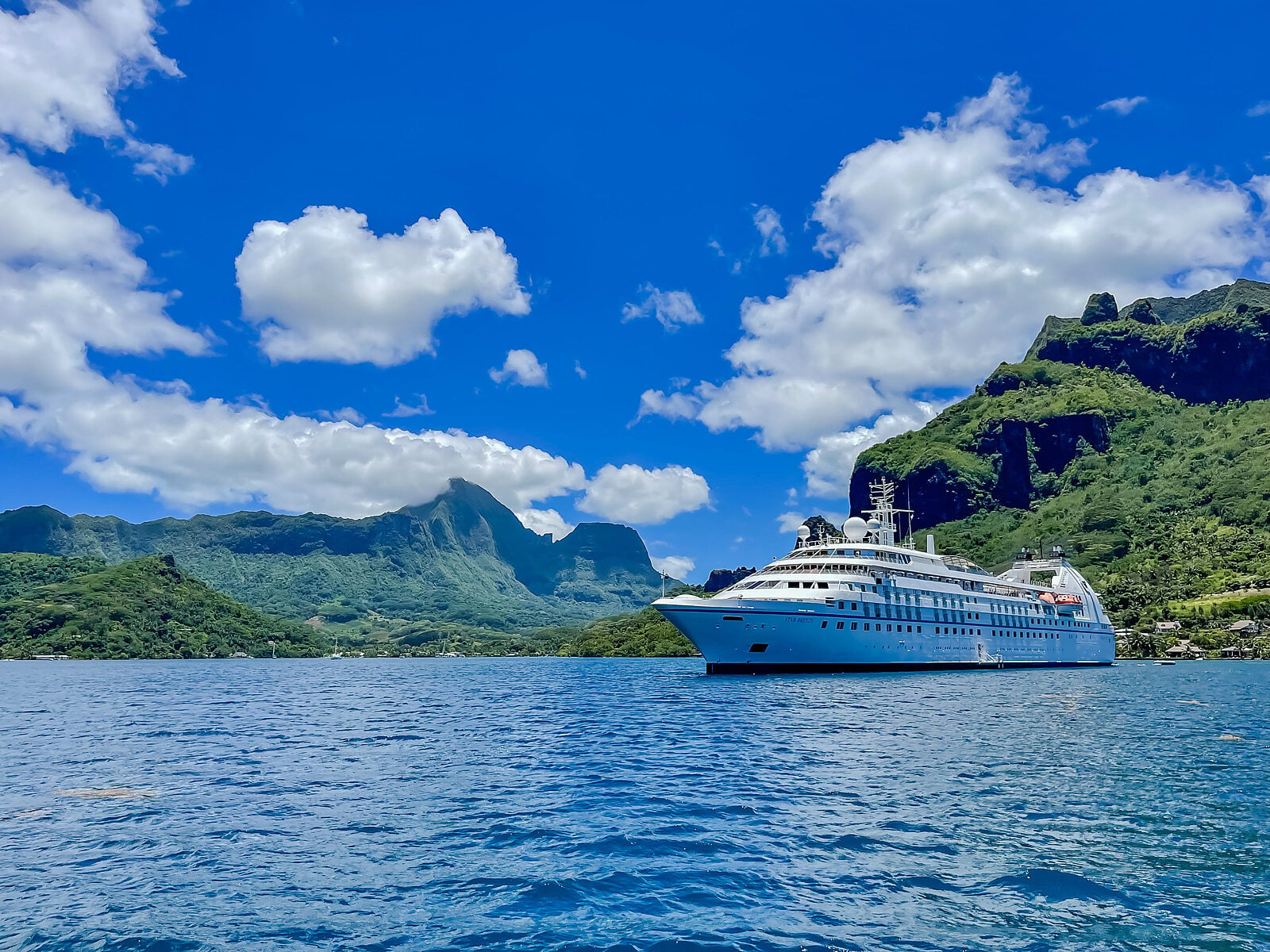
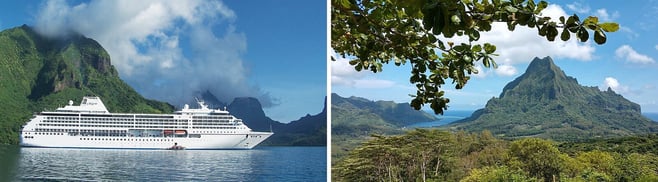
By 8 a.m., Moorea has risen ahead in ridges, spires, and deep green folds.
Cook's Bay cuts into the island like an entrance built on purpose, sharp peaks framing the water before you even step ashore. Inland, the road climbs through pineapple country toward a lookout where both bays open up at once. Along the coast, the lagoon holds its brightness right up against the mountains, no fade between the two.
Regent’s included excursions leave you with one simple decision: head inland or take to the water, whichever the morning calls for.
Huahine
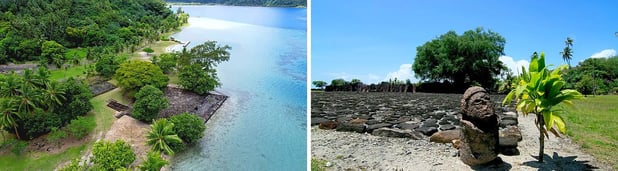
Huahine lowers the volume. Villages and gardens sit close to the shore, ancient stone fish traps still shape the shallows near Maeva, and blue-eyed eels move through the streams of Faie with their own collection of local legends.
After Moorea’s visual drama, the island feels less arranged for an audience. Its beauty reveals itself gradually, through wet taro fields, roadside fruit stands, and long stretches where the lagoon flashes between the trees.
Raiatea
At the UNESCO-listed Taputapuátea marae, the sea stops looking like empty space.
This stone ceremonial center once anchored a network of voyaging, belief, and exchange that reached across Polynesia. From its edge, the neighboring islands begin to feel connected rather than scattered. The Pacific was a road long before it became an itinerary.
Raiatea also holds French Polynesia’s only navigable river, the Faaroa, which winds into an interior of dense vegetation, farms, and volcanic slopes. It is the island that gives all that blue water a past.
Bora Bora
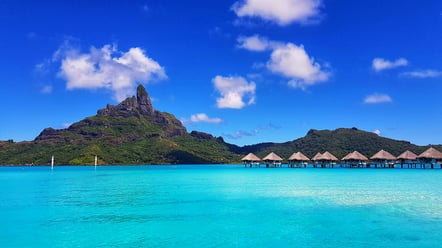
Mount Otemanu rises sharply from Bora Bora’s center, its dark volcanic ridges catching the clouds above a lagoon that shifts from pale turquoise to deep cobalt. When the water is still, the mountain appears twice: once above the palms, and again in its reflection.
The view changes depending on how you approach it.
From a catamaran, the island becomes a dark green silhouette encircled by blue. From the road, the lagoon appears in electric flashes between palms, homes, and gardens.
Then, at 6 p.m., the ship clears the reef. The mountain softens into haze, then disappears.
It is the last land you will see for two days.
The Open Water
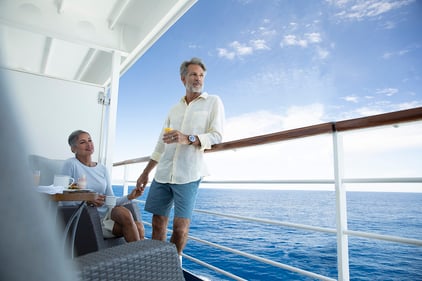
On the first morning, you still glance toward the horizon for land. By the second, water fills every window, stretching beyond your balcony and remaining unbroken when the dining room lights come on.
This is where Seven Seas Splendor earns its place in the story. With 746 guests across 373 suites, each with a furnished private balcony, the ship gives you space to retreat, then rejoin the day whenever you choose.
By then, Regent’s inclusions have begun working quietly in the background. Your minibar is refreshed, the clothes you wore ashore return from valet laundry ready to wear, and breakfast arrives in your suite as the first light spreads across the water. Specialty dining, wines and spirits, gratuities, and Wi-Fi are already covered.
Pago Pago
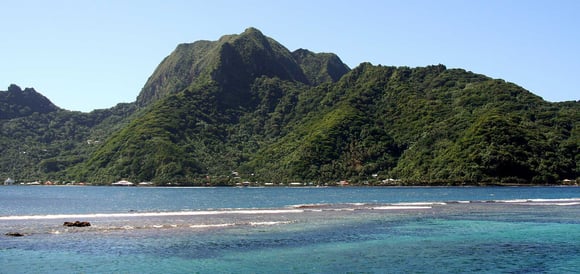
After two days of blue, Pago Pago arrives almost violently green. Rainforest crowds the slopes around a deep volcanic harbor, and clouds catch on the ridgelines above the ship.
American Samoa is home to the only U.S. National Park Service site south of the equator, protecting tropical rainforest and coral reef. An included nature or cultural excursion is especially useful here, where independent transportation can be limited and the most revealing landscapes lie beyond the waterfront.
When the ship leaves, Apia is geographically close. On the calendar, it is already tomorrow.
The International Date Line
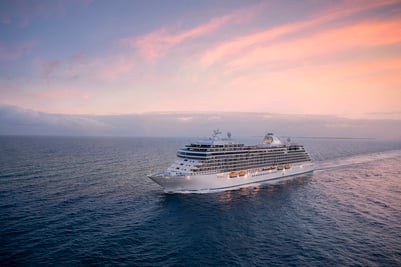
As Seven Seas Splendor crosses the International Date Line, the calendar jumps forward by 24 hours. Nothing on board changes.
The coffee is the same temperature, the wind moves the same way, and the ocean offers no visible sign that you have entered tomorrow. That is precisely what makes it strange.
Regent lets that invisible divide become part of the journey, giving you a stretch of open ocean to sit with the unsettling thought that time has changed, even when everything around you looks the same.
Apia
You arrive in Samoa expecting tomorrow to look different. It does not.
Palms move in the same trade wind, the reef takes the swell in the same white line, and morning gathers over the mountains as if the calendar has done nothing unusual.
Regent’s wider Apia excursion portfolio has included its Apia Township and Surroundings tour, a guided route through the capital that visits Samoa Cultural Village, Mulivai Cathedral, and Villa Vailima. At Villa Vailima, Robert Louis Stevenson’s former home, the writer is remembered by his Samoan name, Tusitala, or “teller of tales.”
It is a fitting stop after the ocean has removed a page from your own story.
Fiji
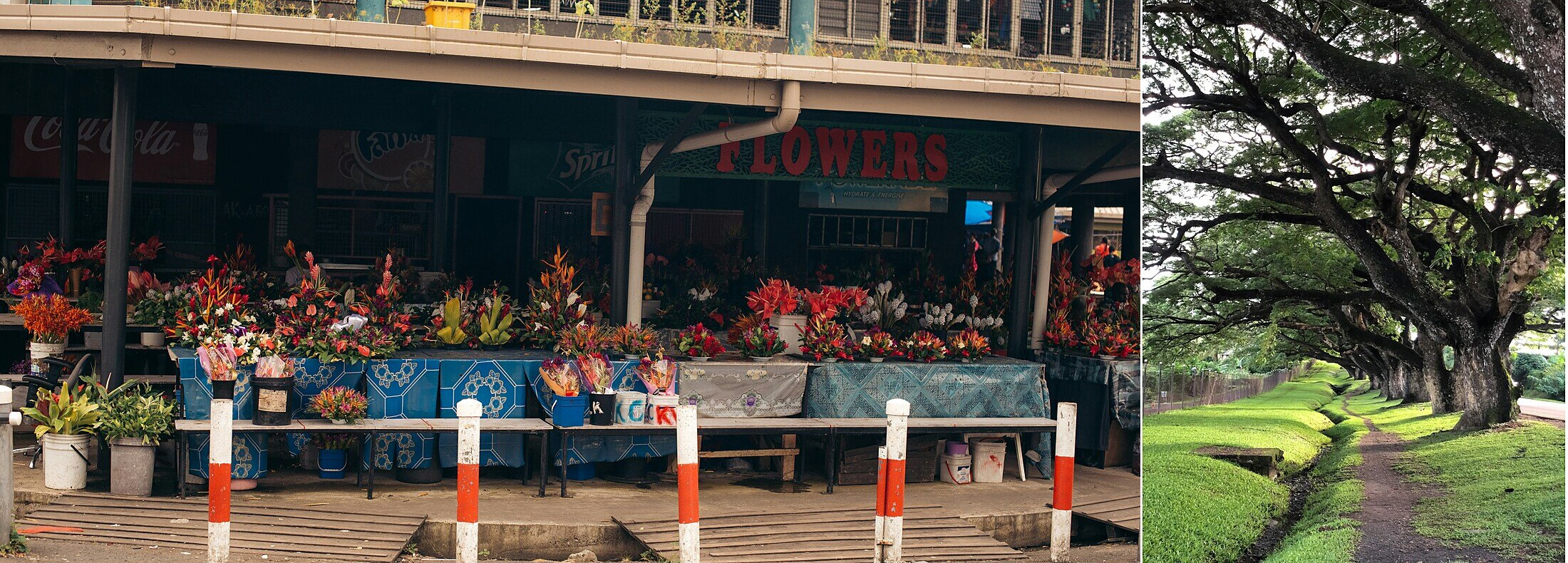
Suva replaces lagoon quiet with market noise, civic buildings, and the scent of spices and fried snacks drifting from Indo-Fijian food stalls. This is Fiji at its most lived-in: humid, energetic, and far more interesting than a capital polished into resort scenery.
The next morning reveals another side of Viti Levu. Lautoka sits on the island’s drier western coast, where sugarcane fields, gardens, and low-slung streets replace Suva’s density.
Seeing both ports back-to-back is the point.
Regent’s included shore program lets you explore urban Fiji one day and its agricultural side the next without deciding which version is worth an added excursion charge.
Lifou
After a deliberately unhurried beach day on Mystery Island, Lifou adds the contours back in.
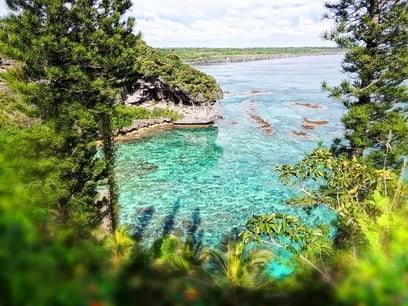
The raised coral island feels different immediately. Pale cliffs lift above intensely blue water, forest thickens inland, and vanilla vines grow beneath carefully managed shade. The ground beneath you was once part of the reef itself, pushed upward over time into an island of caves, cliffs, and dense vegetation.
This is also Kanak country, not simply another tropical stop. A village or plantation visit brings the island’s living culture into view before the voyage continues toward New Caledonia’s capital.
Nouméa
Many itineraries give Nouméa a day. Regent gives it nearly a day and a half.
One day can turn toward New Caledonia’s UNESCO-listed lagoons, part of one of the world’s three most extensive reef systems and habitat for turtles, whales, and dugongs. The next can belong to the Tjibaou Cultural Centre, where Renzo Piano’s curved timber forms respond to Kanak architecture, art, and the wind moving across the peninsula.
The overnight removes the false choice between the reef and the culture beside it. You can stay ashore into the evening knowing dinner, your suite, and another full day are still waiting.
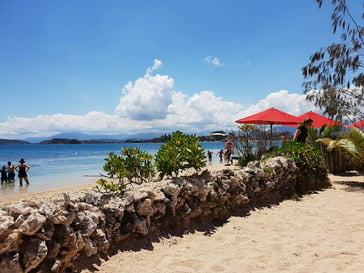
When the ship leaves Nouméa, two final days across the Coral and Tasman seas close the distance to Australia. By now, open water no longer feels like an interruption between ports.
It has become part of the rhythm.
Sydney
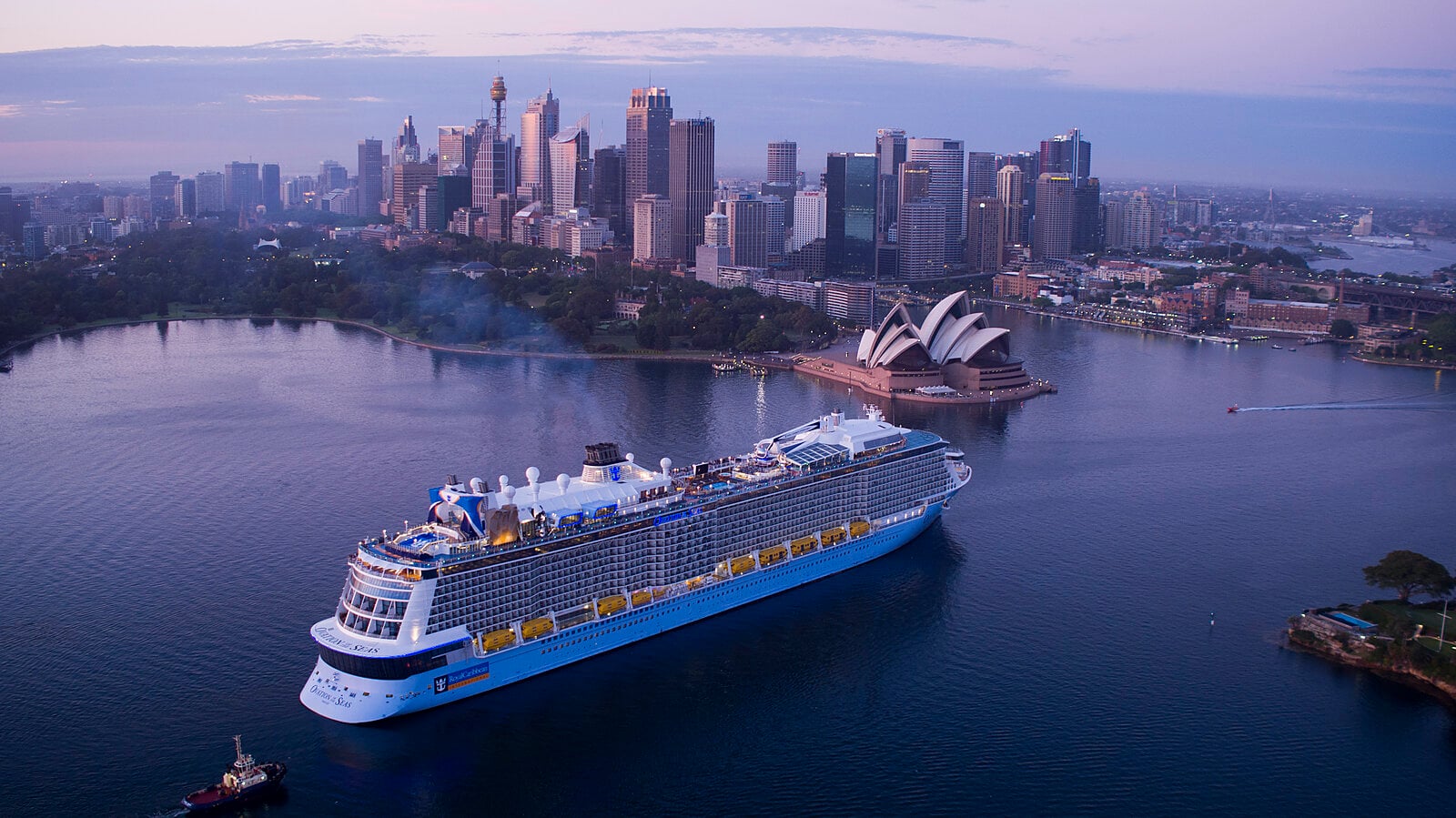
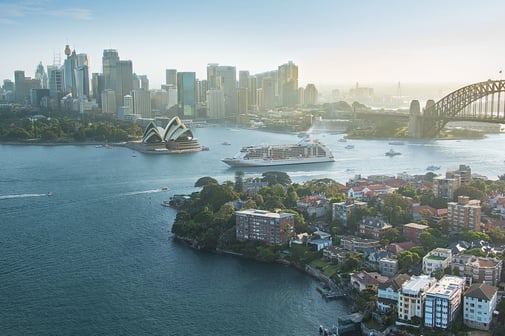
After weeks of volcanic ridges, coral islands, and uninterrupted horizon, Sydney appears in steel, stone, and white sail-like roofs.
You can watch from your balcony or settle into your preferred corner of the Observation Lounge as the Harbour Bridge and Opera House sharpen out of the morning haze.
Regent keeps the ship in Sydney overnight. There is time to walk through The Rocks, stay ashore for dinner, and watch the harbor turn silver beneath the city lights before packing the suite that carried you across the Pacific.
The Pacific, in One Continuous Line
Twenty-one nights, six sea days, a chain of South Pacific islands, and one calendar day surrendered to the ocean. Yet the pleasure of Pearls of the Pacific is not simply how much it includes.
It is how naturally the pieces begin to speak to one another.
Raiatea gives the lagoons a history. The sea days give the islands scale. The two Samoas make an invisible line feel real.
Regent holds it all together with one suite, an expansive included shore program, and enough time to notice the distance between each arrival.
Start Planning Your South Pacific Crossing
Ready to follow the Pacific into tomorrow? An MVT advisor can help you compare current fares, explore suite-level benefits, review the final excursion menu, and plan the details around Papeete and Sydney.