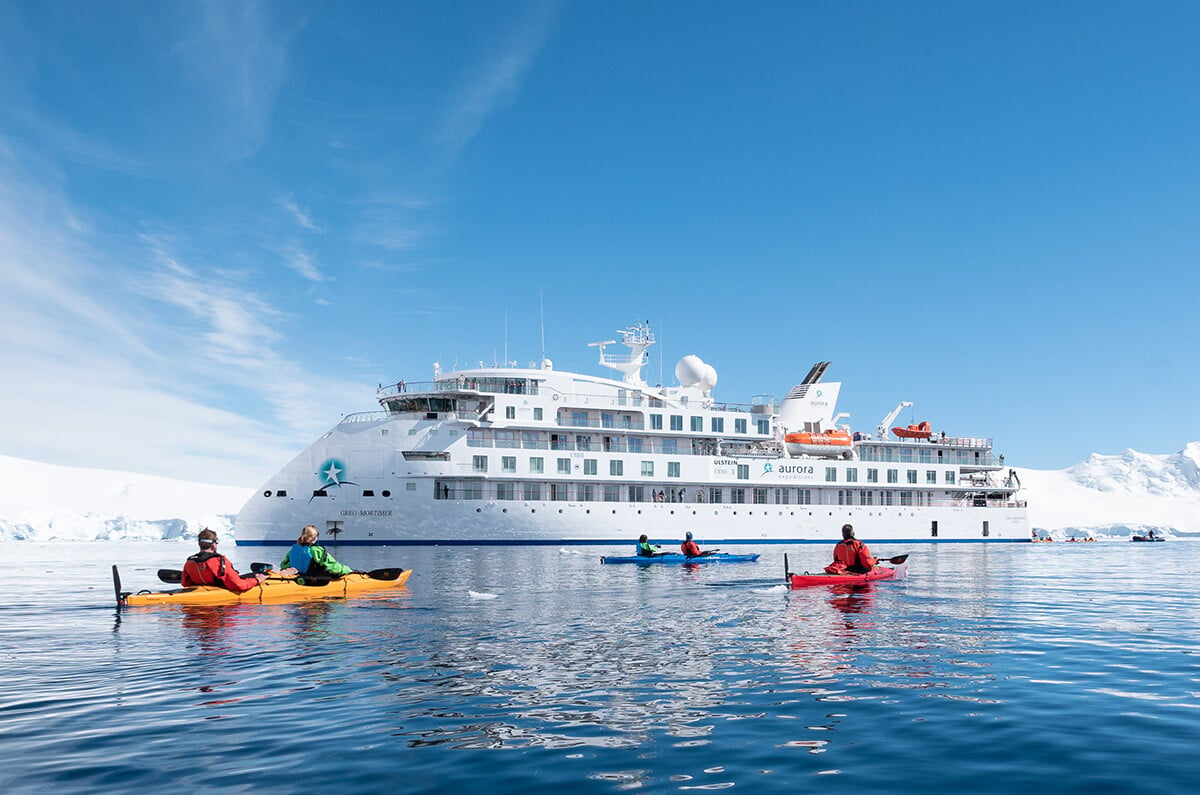

You know the place. Try another way in.
You know which hotel you like, where to book dinner, and how to fill the days. Returning has its pleasures. It can also mean slipping into the same trip without quite choosing it.
How much of the way you travel is preference, and how much is habit?
Perhaps you’d linger in a familiar museum with a private guide, noticing details you usually pass. Or take the train between cities and discover how much you enjoy the hours you normally spend trying to save.
Across yachts, expedition ships, small groups, private journeys, and rail, the choices go beyond transportation. They shape whose company you keep, who sets the pace, and how you come to know a place.
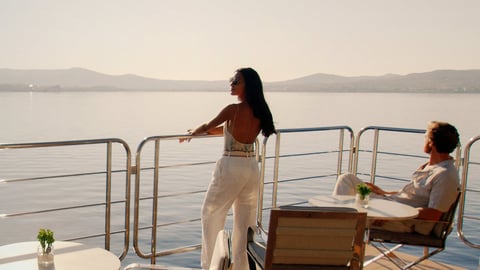
Yachting
From Hvar’s Fortica, you look over terracotta roofs toward the Pakleni Islands, tracing the coastline from above after approaching it by water. Along Sardinia, you might spend the afternoon swimming instead, returning aboard with salt drying on your shoulders.
Consider June and September for these coastlines if you prefer fewer crowds than in July and August. Your dates also influence the yachts available and the conditions you can expect in the water.
.jpeg?width=480&height=224&name=EV_2024_Exteriors_St.%20Lucia_004%20(1).jpeg)
A suite or the whole yacht?
On a scheduled sailing, you reserve a stateroom or suite and join a published route. SeaDream I and II each accommodate up to 112 guests, with new company over dinner and room for your own routines. For a couple, it’s a way to travel by yacht without organizing a charter.
A crewed charter starts with your circle: lunch aboard after a long swim, then time ashore when the heat eases. The captain shapes the route around your preferences and the conditions.
Beyond the weekly fee, many charters require an advance of roughly 30–40 percent for fuel, food, and port charges, reconciled against actual spending. Taxes and gratuities also belong in the budget.
Your advisor and charter specialist can compare a route linking distant ports with one that leaves more time at anchor, then check the cabins against your guest list. Five couples may want comparable bedrooms; two families may prefer twins for the children. Later, you linger on deck with your friends as the harbor lights come on across the water.
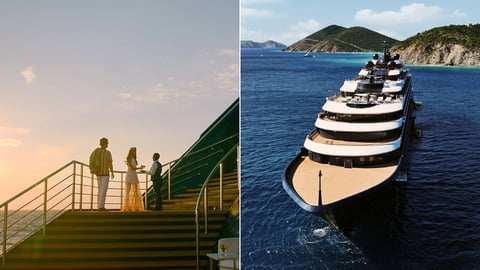
Expedition Ships
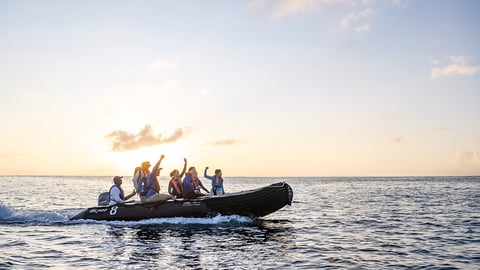
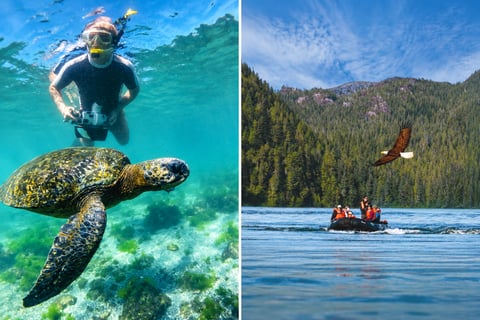
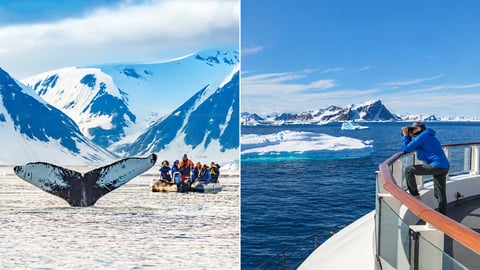
The Zodiac slows beside the ice, revealing blue seams and scalloped edges. Your naturalist points into a crevice. You lower your camera. Cold brushes your cheeks, the boat rocks gently, and the scale of the place begins to sink in.
From your suite, you can watch that landscape for hours. How you explore it depends partly on the ship’s passenger count and the way its outings operate.
The number that shapes your morning
In Antarctica, no more than 100 passengers may be ashore from a vessel at one time, and some sites allow fewer. Ships carrying more than 500 passengers cannot make landings.
On a larger expedition vessel, you may rotate between a shore visit and a Zodiac cruise, studying the ice from water level while another group walks ashore. A smaller passenger count can simplify those arrangements, but weather, site restrictions, and the expedition team still determine your time on land.
Ask how landings work at full capacity, including the balance between shore visits and small-boat cruising. The answer helps distinguish ships whose suites may look equally appealing.
Ice, or warm water ?
Antarctic voyages generally operate from November through March. Early visits may coincide with penguin nesting, while later summer brings chicks. On many itineraries, crossing the Drake Passage is part of reaching the Peninsula, so the voyage itself deserves as much consideration as the landings.
In the Galápagos, you might exchange those layers for a wetsuit, watching a sea turtle move beneath you before returning ashore to volcanic ground. You can sail year-round, but if you’re eager to spend more time in the water, December through May generally brings warmer conditions for snorkeling.
Let the experience you most want guide the comparison. Snorkeling among marine wildlife points you toward different destinations and seasons from photographing ice.
In either case, leave room for conditions to shape the day.
Before you choose the kayak
From the ship, you watch a kayak slip between the ice. Getting into that seat can mean transferring from a Zodiac, then making the return move after 60–90 minutes of paddling. Even an introductory outing may require moderate fitness, since shore visits can involve stepping out of a small boat and walking on uneven ground.
A single paddle in an inflatable kayak is a different commitment from a voyage-long sea-kayaking program. Before reserving, have your advisor check the transfer requirements and whether the activity overlaps with a landing.
If you hope to spend the morning photographing penguins ashore, you may want to keep that time for your camera.
Small-Group Journeys
You’re standing in a courtyard with your guide when another guest asks about the patterned tiles. The answer leads to a detail in the doorway, then a story about the people who once lived here. You’re looking at the building too. That question simply didn't occur to you.
The conversation follows you to dinner, where your new friend finds a photograph of similar tilework from the previous afternoon. You lean over to look, and the two visits begin to connect.
How small, and whose pace?
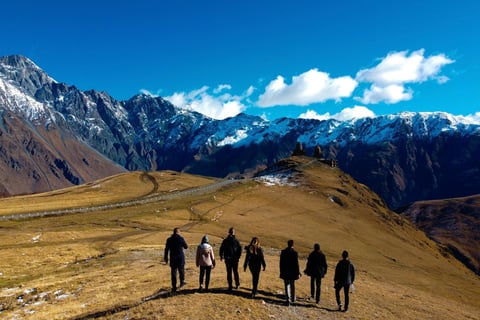
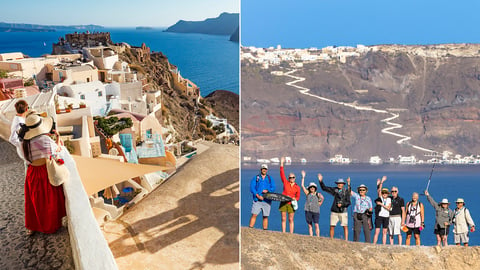
“Small group” covers different experiences. Some nature specialists typically travel with 8–10 guests, while established luxury cultural departures may accommodate 18. Check the maximum for the particular journey, along with the transport and daily schedule.
Then look at what holds the group’s attention. On a photography trip, you might stay beside a lake while the mountains turn pink. A food-focused journey might devote that morning to a market. The shared interest gives you something to talk about, but you also share decisions about when to move on.
Your advisor can compare free afternoons, walking demands, and hotel changes before you commit. If your departure is approaching, they can also check remaining places and room categories on existing journeys alongside the possibilities for a private trip.
If you enjoy letting another guest’s curiosity influence the day, that company can become part of what you remember. If you want to decide when to leave the courtyard, private travel gives you more say.
Custom Private Journeys
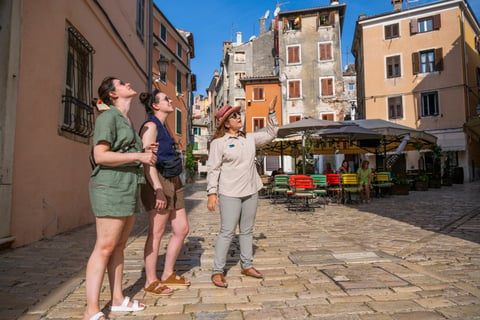
Your guide notices which paintings make you stop. The conversation turns to the brushwork of an artist you love, and a museum you expect to fill an hour becomes the visit you’re still discussing with your partner over dinner.
You may hear your advisor use FIT, often expanded as free independent travel, for independently arranged trips. A custom private journey builds around your dates and interests, with hotels, transportation, and guiding arranged for you and your companions rather than a shared departure.
Where would you rather spend more?
Private travel is not automatically the most expensive choice. The cost depends on where and when you go, the accommodation you choose, and how much private service you arrange.
Suppose the museum is the reason you want to visit. Your advisor can compare the cost of a specialist-led morning with the room upgrade you are considering. You might choose a smaller room and spend the difference on a guide who knows the collection in depth.
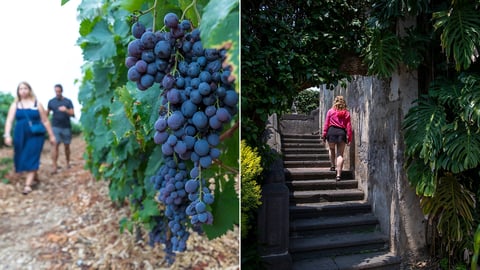
Elsewhere, keep a driver for the day of vineyard tastings and leave the next afternoon for the pool. Stay longer at two hotels instead of moving between three. You retain the arrangements that matter without filling every hour with a guided activity.
Give the important details a head start
A planning window of 6–12 months is a useful starting point for custom travel, with wildlife and safari arrangements often warranting approximately a year.
For summer 2027, this autumn gives you time to explore the possibilities. Begin with the experience you most want: an appointment with a ceramics specialist, a particular safari camp, or several nights at a vineyard estate. Your advisor can check availability first, then shape the surrounding days so you have time to enjoy it.
Luxury Rail
You dress for dinner as the countryside passes your window. Across the dining-car table, your friend raises a glass as the first course arrives. Conversation carries you through the meal, interrupted by a village or a stretch of coastline that draws you both back to the glass.
Whether you return to a hotel or settle into a compartment afterward changes the journey you choose.
A day on the rails or a night aboard?
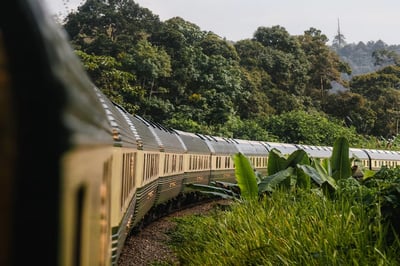
Belmond’s British Pullman offers a return journey from London to Bath. You watch the city give way to countryside, explore Bath, and return to your London hotel that evening, without changing where you unpack.
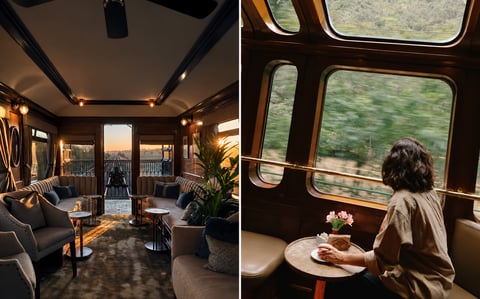
On the Venice Simplon-Orient-Express, a Paris-to-Venice journey can include one night aboard. In a Historic Cabin, banquette seating becomes upper and lower berths, with a washbasin in the compartment and shared restrooms at the end of the carriage. Suites offer double or twin configurations and a private en suite bathroom.
Look at the cabin alongside the dining-car photographs. If a private bathroom or a particular bed arrangement is essential, your advisor can compare the appropriate suite with a daytime journey and hotel stay.
Choose the departure before booking the surrounding nights, allowing enough time for transfers and arrival. With those connections settled, you can linger over breakfast as the next stretch of countryside comes into view.
What belongs in your next trip?
Perhaps the yacht appeals, but coordinating a charter does not. You want a guide’s knowledge and an afternoon to yourself. Or you discover that a night on the train interests you as much as the cities at either end.
You now have more to bring to the planning conversation than a destination. You can explain how you want to spend the day, what you’re comfortable sharing, and where you would happily spend more.
Reach out to your advisor with your dates, budget, and the experience you keep returning to as you read. Together, you can explore how to make it part of your next trip.