
The Same Summer, Four Ways In
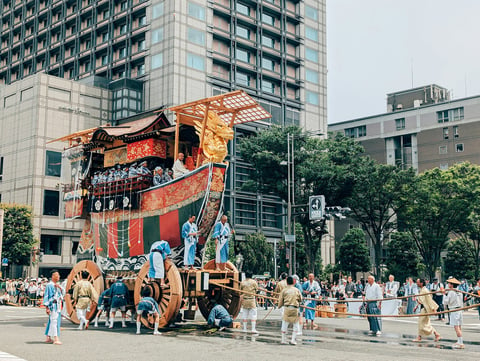
You hear the ropes tighten before the float moves. Crews slide split bamboo under the wheels and soak it, and then 12 tons of wood, textile, and metal pivot through a Kyoto intersection while the crowd leans in.
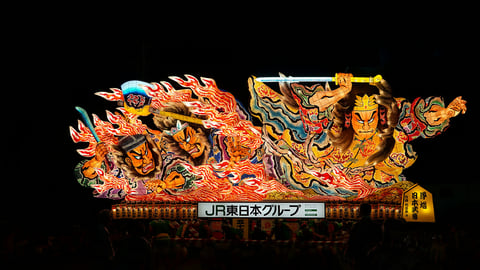
Two weeks later in Aomori, dusk reaches a painted warrior and his paper face lights from within. By mid-August on Shikoku, wooden clappers crack through Kochi, then rows of straw hats tilt beneath Tokushima lanterns.
These festivals share a season, but not a version of Japan. Gion is a daytime procession you watch from one fixed spot. Nebuta exists only after dark. Yosakoi hands the choreography to the dance teams and lets it mutate every year. Awa Odori pulls you off the curb and into the line.
The question is not which festival is best. It is what you want to witness, and which voyage gives you the chance to be there.

July 17: What Kyoto Keeps
Gion Matsuri rewards close looking. Thick rope binds the wooden frames of Kyoto's largest floats without a single nail, so they can come apart again. Nothing here stands year round. Your eye moves to the carvings and metalwork, then to Nishijin weavings displayed alongside centuries-old tapestries from abroad.
From July 14 to 16, lanterns illuminate the stationary floats, streets close to traffic, and families open their townhouses to display folding screens normally kept in storage, a custom called the byōbu matsuri.
Then on July 17, 23 floats move through the city center. The tallest rise 25 meters and weigh as much as 12 tons. Their wheels do not pivot. At each intersection, neighborhood crews lay wetted bamboo beneath the wheels and pull until the entire structure turns. In the crowd, you hear the bamboo split under the weight, and the cheer goes up before the float has finished coming around.
Choose Gion if you want to see what it takes to keep a tradition moving. Expect a daylight procession, summer heat, and sidewalks crowded hours before the first float moves.
August 2: Aomori Waits for the Lights
Nebuta does not exist until the light comes on.
Wood and wire form the frame, covered in washi paper and paint. In daylight, you study the brushwork and seams. After dark, hundreds of bulbs illuminate the paper from within, and the face you examined at noon seems to turn toward you.
The Aomori Nebuta Festival runs from August 2 through 7. On opening night, children's nebuta join the towering floats in their first evening procession.
August 7 is a different experience. The parade begins at 1 p.m., followed by an evening procession of selected floats aboard boats in Aomori Bay, beneath fireworks. If you want to see the floats on the water, the final night is the one to plan around. It is also a farewell to creations that will soon be dismantled.
Choose Nebuta if you want to witness something that cannot be repeated. Months of work culminate in six days of celebration. What you see this summer will not be there the next.
August 12: Kochi Reinvents the Dance
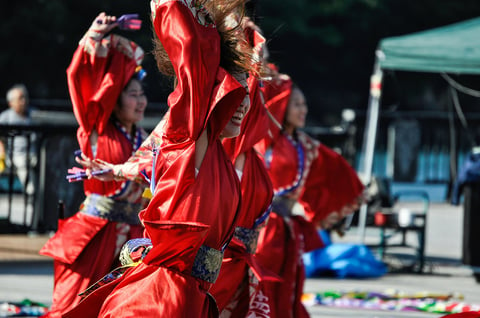
At Kochi’s Yosakoi Festival, a decorated sound truck comes down the street with its speakers turned up, followed by dancers carrying wooden naruko clappers. Each team brings its own costumes, music, and choreography. The next may look and sound entirely different.
Created in 1954 to revitalize Kochi after the war, Yosakoi now brings around 200 teams and as many as 20,000 dancers into the city. The clappers and elements of a local song provide a common foundation, but leave room for reinvention.
The festival runs from August 9 through 12. On the final day, leading teams return for the national competition, bringing their interpretations of the same tradition to the stage.
In Kochi, tradition is something each team gets to remake. August 12 favors polished performances over participation. Reserved seats at the main venue are limited and go on sale in late June, while visitor-participation groups dance earlier in the festival.
August 13: Tokushima Draws You Closer
One day later, Tokushima changes the terms of the dance.
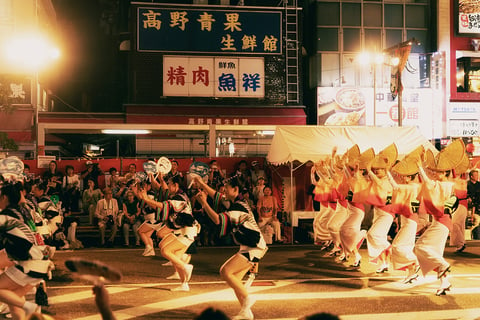
To flutes, drums, bells, and shamisen, some dancers keep their bodies low and their steps loose. Others raise their arms beneath angled straw hats, their feet landing in quick patterns. As the dancers fill the street, the rhythm becomes harder to watch passively.
Awa Odori’s roots reach back more than 400 years, and its August 12 through 15 dates fall during Obon, when families honor ancestral spirits. Musicians set a two-beat rhythm, dancers answer, and calls travel through the crowd. Open dance groups have also welcomed visitors to learn a few steps and join in.
A day later, Awa Odori offers a different relationship with tradition. Where Kochi gives each team room to reinvent the dance, Tokushima draws thousands into a shared rhythm. The boundary between watching and joining begins to thin.
Three Silver Whisper Voyages Built Around the Dates
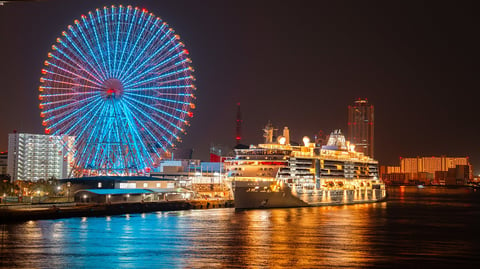
In 2028, Silversea has timed three separate Silver Whisper voyages to these four festivals. This is not one long festival circuit. Each sailing makes a different date the center of the route.
Gion Matsuri from Kobe
The first 12-night round-trip voyage departs Tokyo on July 13 and remains in Kobe from July 16 until 9 p.m. on July 17. Depending on the final shore program, that overnight could make room for the lantern-lit evening and the next day’s procession.
Kobe is the port, while Kyoto requires an overland journey. Festival traffic, seating, walking distances, and the return to the ship need to be considered together. This is the widest festival window of the three voyages, but also the most involved transfer.
Nebuta’s Opening Evening in Aomori
The 14-night round-trip voyage leaves Tokyo on July 25 and calls directly in Aomori on August 2 from 6 a.m. to 9 p.m. Unlike Gion, the festival city is the port. The tighter question is time.
Because the parade traditionally runs until the ship’s scheduled 9 p.m. departure, the exact 2028 viewing plan matters. Consider this an arrival for Nebuta’s opening evening rather than a promise of the complete parade. Your advisor can confirm the viewing window and return plan once details are available.
Two Days of Dance on Shikoku
The third 11-night voyage departs Tokyo on August 8 and pairs two festivals on consecutive days: Yosakoi in Kochi on August 12 and Awa Odori in Tokushima on August 13. Silver Whisper remains in Kochi until 9:30 p.m. and calls at Komatsushima the following day until 11 p.m., allowing both festival visits to extend into the evening.
Komatsushima is the gateway to central Tokushima, so the transfer and return time shape the second evening. It is the only sailing that pairs both dance festivals, taking you from Kochi's individual interpretations to Tokushima's collective rhythm in the space of two days.
The Quiet Between Festival Days
At the end of the night, the suite door closes and the sound changes.
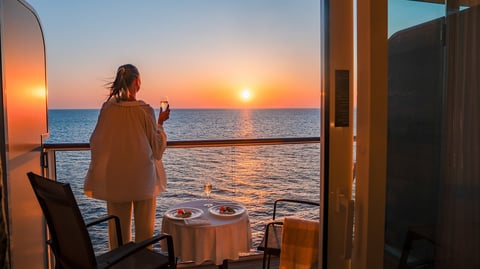
Silver Whisper carries 392 guests, a useful scale after hours spent among thousands. Butler service and 24-hour in-suite dining let you return on the festival’s schedule. In a veranda suite, the next hour may be nothing more ambitious than cool air, a late meal, and the port lights receding.
The ship cannot shorten the transfer from Kobe or remove August’s humidity. What it provides is controlled quiet between festival days, especially on Shikoku’s back-to-back schedule.
Make the Festival Fit the Voyage
Choosing the experience is one decision. Making its hours work within the voyage is another. Gion unfolds beneath the afternoon sun, Nebuta comes alive after dark, and Kochi and Tokushima place two active evenings back-to-back. In Japan’s hot, humid summer, those differences affect how much time you spend ashore and leave for rest.
Your advisor can help you weigh reserved seating against street-level viewing, walking distances, and whether the schedule allows for an air-conditioned transfer or later start. Once the final shore program is released, they can confirm what is included and what requires a separate budget.
Begin planning 12 to 18 months ahead for your preferred voyage and accommodations. Festival seating and local programs may be released later, so the voyage and hotels come first, followed by viewing arrangements and transportation as bookings open.
What Will You Make Time For?
Four festivals. Three voyages. Three very different ways into Japan.
You might find yourself drawn to the work of generations, the spectacle of something made to disappear, or two nights that reveal how differently a country can dance. Each asks something different of your time and attention.
The choice begins with what you want to be part of.
Your advisor can help you compare the three Silver Whisper sailings, confirm festival access as arrangements are released, and build the voyage around the experience you want to make time for.